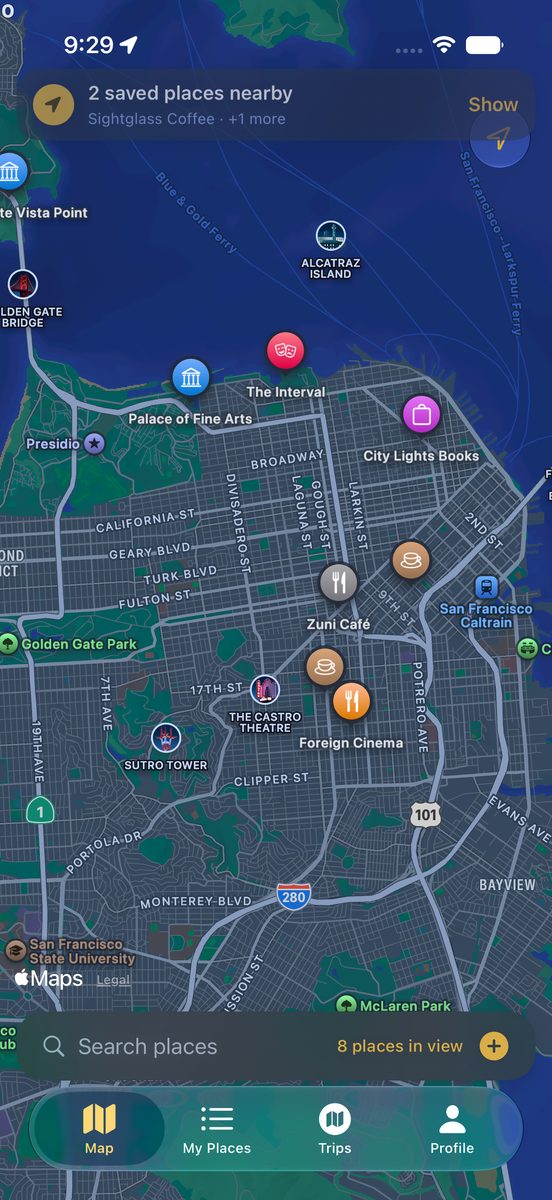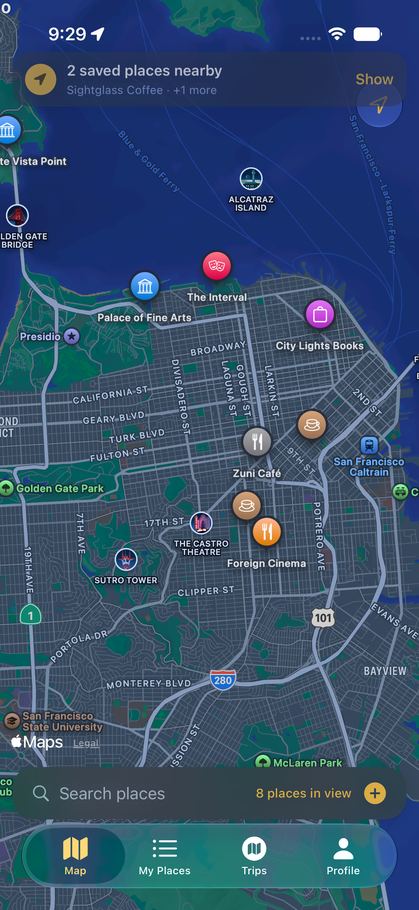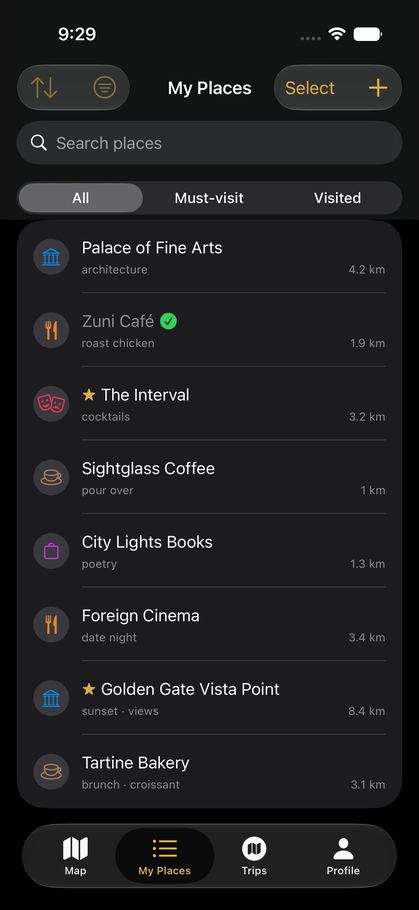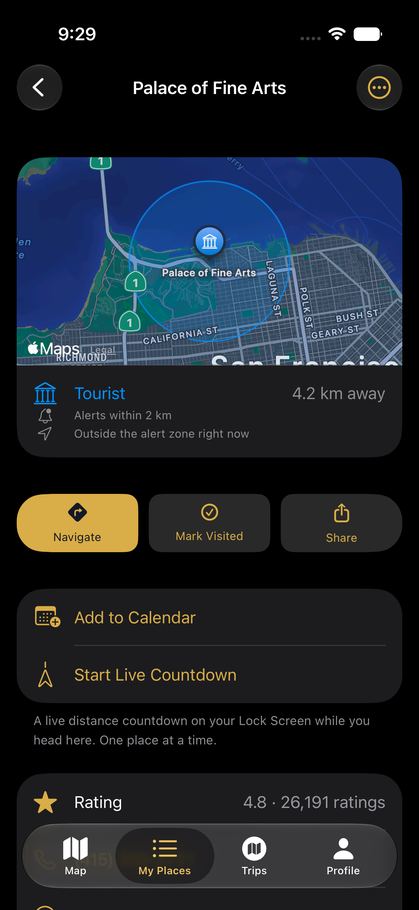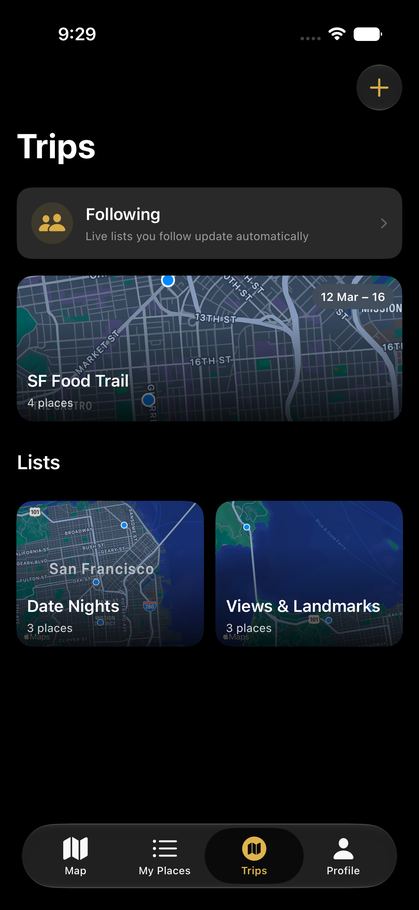
A friend names a restaurant. A reel shows a café. Save it in seconds — then Nearmark taps you on the shoulder when you're near it, even with the app closed.
You already save places — screenshots, bookmarks, a message you meant to come back to. Then you walk right past the place and never think to look. The list isn't the problem. Remembering to check it is.
Every saved-place app waits for you to open it. That works fine on the evening you sit down and plan something.
Your phone checks whether you're near your own saved places. That check happens on the device, your location is never shared, and there's no history for anyone to sell. Battery use is minimal by design — the app watches a handful of places, not you.
Your places on a map, the reason you saved each one, and a trip that knows what's on today.


The alert is the point. These come with it.
Follow one and it stays live: new places appear as they're added, and you get an alert when you're near one.
Monthly, yearly, or pay once — current prices are on the App Store. The alert itself is never behind the paywall.
No. Nearmark doesn't follow you — iOS watches a small number of places for it and wakes the app only when you cross into one. That's the same low-power machinery your phone already uses for reminders at a location.
Yes, and that's the entire point. If you had to open Nearmark for it to work, it would be a list — and you'd have to remember you saved something, which is the problem in the first place.
Nowhere. The check happens on your device, against places you saved. There's no location history stored, nothing uploaded, and nothing to sell.
Yes. Share the post to Nearmark and it reads the place from the link. Those apps don't pass captions along, so for a reel a screenshot works best — Nearmark reads the words straight off the image.
Not yet. Nearmark is iPhone and Apple Watch today.
No. It only ever shows you places you chose to save, or a list you deliberately followed. It won't suggest restaurants at you.